
Soft, pillowy, blistered naan fresh from your own oven. It sounds like something you’d only get at your favorite Indian restaurant. But the truth is, naan bread is surprisingly simple to make at home. With just a handful of ingredients and a hot skillet, you can create flatbreads that rival any takeout version.
This recipe delivers everything you want from naan—tender texture, those signature bubbles, a slight chew, and that unmistakable flavor. No tandoor required. Just a hot skillet, a few minutes of patience, and the satisfaction of pulling warm, fragrant bread from your own kitchen. Once you make naan at home, you’ll wonder why you ever bought it.
—
Why Homemade Naan Is Worth It
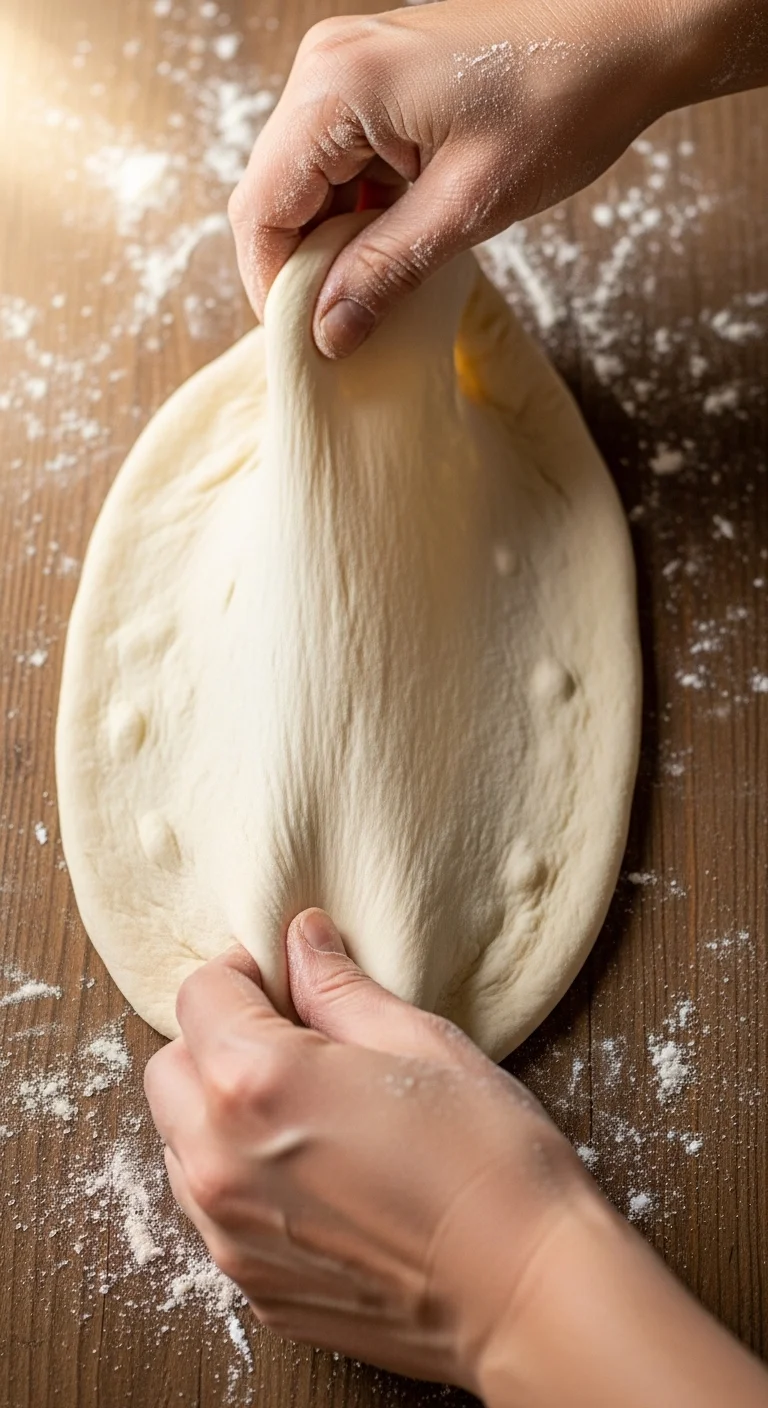
Fresh naan tastes nothing like the packaged version at grocery stores. The real thing arrives at your table warm, slightly charred in spots, brushed with garlic butter, and so soft it practically melts. Homemade naan delivers that experience any night of the week.
The texture alone makes it worth the effort. Store-bought naan sits on shelves for days, losing moisture and that signature elasticity. When you make it yourself, you control every variable. The dough rests properly, the skillet gets screaming hot, and you eat it minutes after it comes off the heat. That’s when naan is at its absolute best.
Then there’s the flavor. A little yogurt in the dough adds tang. A touch of sugar activates the yeast. Garlic butter brushed on after cooking melts into every crevice. You can customize it exactly how you like—more garlic, fresh herbs, a sprinkle of salt, or keep it plain to soak up curries and stews.
Cost matters too. A batch of homemade naan costs a fraction of what you’d pay at a restaurant or even the grocery store. Basic pantry ingredients—flour, yeast, yogurt, salt—make enough naan to feed a family. That’s about $2 worth of ingredients versus $5 for a package of four at the store.
And honestly? There’s something deeply satisfying about pulling blistered, golden bread from a hot skillet. It’s cooking at its most rewarding—simple ingredients transformed into something that feels special.
—
Ingredients for Perfect Naan Bread
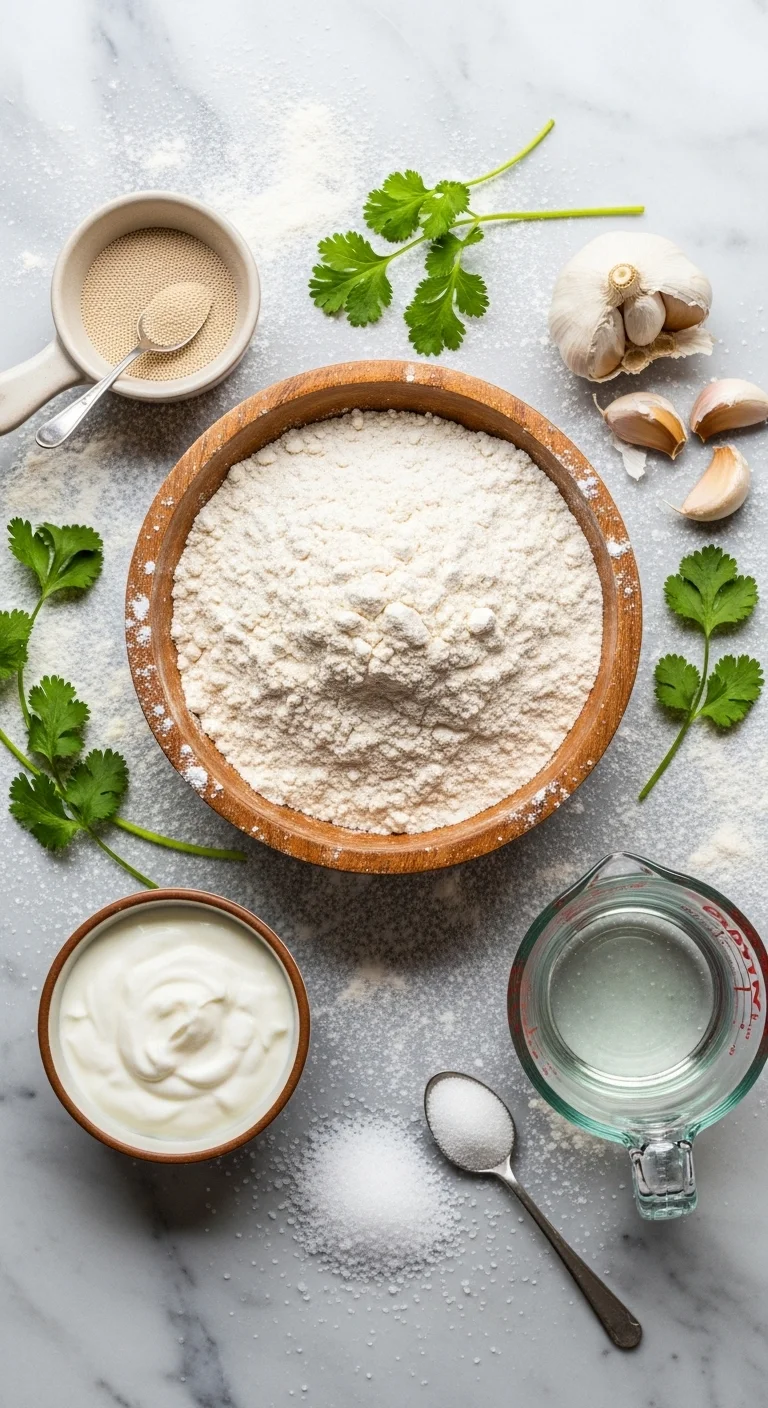
Great naan starts with great ingredients. Here’s what you need:
Flour: 3½ cups (about 450 grams) of bread flour or all-purpose flour. Bread flour’s higher protein content creates stronger gluten, giving naan that signature chew. All-purpose flour works beautifully too—it produces a slightly softer, more tender bread.
Yeast: 2 teaspoons of active dry yeast or instant yeast. Active dry yeast needs to be proofed in warm water first. Instant yeast can go straight into the flour. Both work equally well.
Warm Water: ½ cup (about 120ml) of water around 105°F to 110°F. Warm enough to activate the yeast, not so hot it kills it. Think bathwater temperature.
Plain Yogurt: ½ cup of full-fat plain yogurt, room temperature. This is the secret to tender, soft naan. The yogurt adds richness, tang, and helps create that pillowy texture.
Salt: 1½ teaspoons of fine sea salt. Essential for flavor and strengthening the gluten structure.
Sugar: 1 tablespoon of sugar or honey. Feeds the yeast and adds a hint of sweetness that balances the savory flavors.
Baking Powder: ½ teaspoon (optional). A small amount adds extra lift, especially if you’re using all-purpose flour instead of bread flour.
Oil or Butter: 2 tablespoons of vegetable oil or melted butter for the dough, plus extra for brushing. Oil keeps the dough soft; butter adds flavor.
For Topping: 3 to 4 tablespoons of melted butter mixed with 2 minced garlic cloves, fresh cilantro or parsley, and flaky sea salt. This garlic butter takes naan from good to unforgettable.
Equipment: A large mixing bowl, a cast iron skillet or heavy-bottomed pan, and a rolling pin. A kitchen scale is helpful for accuracy, but measuring cups work fine.
—
How to Make Naan Bread: Step by Step
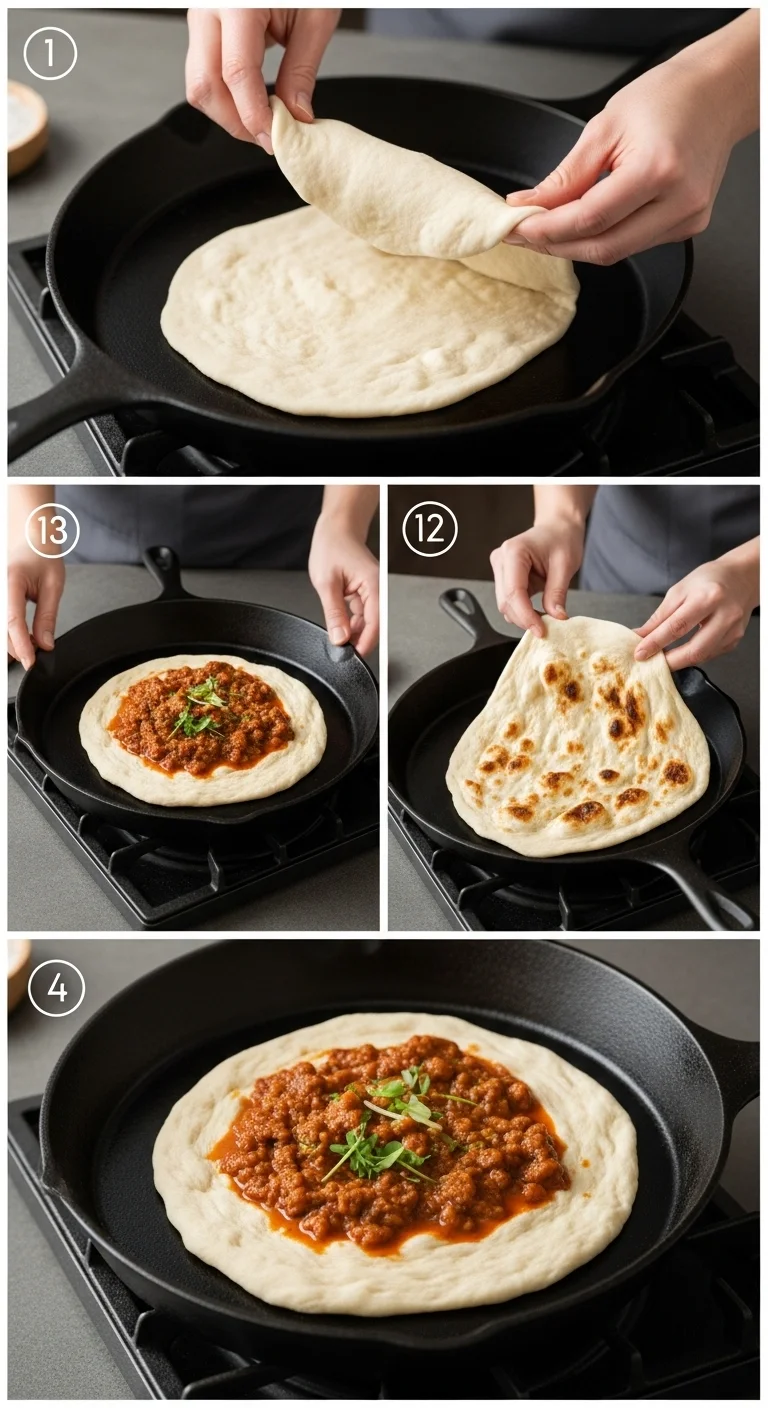
Step 1: Activate the Yeast
In a small bowl, combine the warm water, sugar, and yeast. Stir gently and let sit for 5 to 10 minutes until foamy and fragrant. This tells you the yeast is alive and ready to work. If using instant yeast, you can skip this step and mix it directly with the flour.
Step 2: Mix the Dough
In a large mixing bowl, whisk together the flour, salt, and baking powder if using. Make a well in the center. Add the proofed yeast mixture, yogurt, and oil or melted butter.
Stir with a wooden spoon or your hands until a shaggy dough forms. The dough will look rough and sticky—that’s normal at this stage.
Step 3: Knead the Dough
Turn the dough onto a lightly floured surface. Knead for 8 to 10 minutes until smooth and elastic. The dough should be soft, slightly tacky, and spring back when poked. If it’s too sticky, add a tablespoon of flour at a time. Too dry, add a teaspoon of water.
If using a stand mixer with a dough hook, knead on medium-low speed for 6 to 8 minutes.
Step 4: First Rise
Shape the dough into a smooth ball. Lightly oil a large bowl and place the dough inside, turning to coat all sides. Cover with plastic wrap or a damp kitchen towel. Let rise in a warm spot until doubled in size—about 1 to 1½ hours depending on room temperature.
Step 5: Divide and Shape
Punch down the dough to release air. Turn onto a lightly floured surface and divide into 8 equal portions for medium-sized naan or 6 for larger ones. Shape each into a smooth ball. Cover with a towel and let rest for 15 to 20 minutes. This second rest relaxes the gluten, making the dough easier to roll out.
Step 6: Roll Out
Working one ball at a time, roll into an oval or teardrop shape about ⅛ to ¼ inch thick. Don’t worry about perfect circles—irregular shapes look more authentic. Keep the remaining dough covered while you work.
Step 7: Cook the Naan
Heat a cast iron skillet or heavy-bottomed pan over medium-high heat until very hot—about 5 minutes. The skillet needs to be screaming hot to create those signature bubbles.
Place one rolled naan in the dry skillet. Cook for 1 to 2 minutes until bubbles form on the surface and the bottom is golden with dark spots. Flip and cook the other side for another 1 to 2 minutes. The naan should puff up slightly and develop beautiful charred spots.
Step 8: Brush with Garlic Butter
Remove the cooked naan from the skillet. Immediately brush with garlic butter and sprinkle with fresh cilantro and flaky salt. Stack on a plate and cover with a clean kitchen towel to keep warm while cooking the remaining naan.
Repeat with the remaining dough balls, keeping the cooked naan covered until serving.
—
Pro Tips for Restaurant-Quality Naan

Get Your Skillet Screaming Hot
The secret to perfect naan is high heat. Let your cast iron skillet heat for a full five minutes before adding the first naan. The dough should sizzle immediately when it hits the pan. That intense heat creates the bubbles and charred spots that make naan special.
Don’t Overwork the Dough
Knead just until the dough is smooth and elastic—about 8 minutes by hand. Overworking develops too much gluten, making naan tough instead of tender. The second rest after shaping is equally important. Those 15 minutes let the gluten relax so the dough rolls out easily and doesn’t spring back.
Use Full-Fat Yogurt
Full-fat yogurt gives naan its signature tenderness and richness. Low-fat or non-fat yogurt has more water and less fat, which can make the dough stickier and the finished bread less tender. If you only have low-fat yogurt, reduce the water slightly to compensate.
Brush Immediately
Garlic butter should go on while the naan is still hot from the skillet. The heat melts the butter into every crevice and releases the garlic’s aroma. Waiting even a minute makes a difference. Have your melted garlic butter ready before you start cooking.
Keep Naan Warm
As you cook each naan, stack them on a plate and cover with a clean kitchen towel. The towel traps steam, keeping the bread soft and warm until you’re ready to serve. If cooking for a crowd, you can also wrap finished naan in foil and keep in a warm oven (200°F) for up to 30 minutes.
Water Content Matters
The amount of water you need varies by flour, humidity, and yogurt thickness. Start with the recipe amounts, then adjust. The finished dough should be soft, slightly tacky, and easy to handle. If it’s too sticky to knead, add flour a tablespoon at a time. Too dry, add water a teaspoon at a time.
—
Creative Naan Variations to Try

Once you master the basic recipe, these variations add new dimensions:
Garlic Naan
The classic favorite. Mix 4 minced garlic cloves with ½ cup of melted butter. Brush generously over hot naan and sprinkle with fresh cilantro. For extra garlic flavor, press fresh garlic slices into the dough before cooking—they’ll toast in the skillet and release amazing aroma.
Cheese-Stuffed Naan
Divide the dough into 8 portions. Flatten each into a circle, place 2 tablespoons of shredded mozzarella or paneer in the center, then fold the edges to seal. Roll out gently, taking care not to press too hard on the cheese pocket. Cook as usual. The cheese melts inside, creating a gooey, stretchy center.
Garlic and Herb Naan
Add 2 tablespoons of finely chopped fresh herbs—cilantro, parsley, or even mint—to the garlic butter. Brush over hot naan for a fresh, aromatic finish. For even more herb flavor, knead dried herbs into the dough before the first rise.
Peshawari Naan
A sweet, nutty variation popular in Pakistani cuisine. Knead ¼ cup of finely chopped nuts (almonds or pistachios) and 2 tablespoons of shredded coconut into the dough. Sprinkle with a little sugar before cooking. The nuts toast in the skillet, adding incredible texture and flavor.
Garlic Chili Naan
Add ½ teaspoon of red chili flakes to the garlic butter, or mix finely chopped fresh green chilies into the dough. The heat cuts through the richness of the butter and pairs beautifully with creamy curries.
Whole Wheat Naan
Replace half the all-purpose flour with whole wheat flour. Increase the water slightly—whole wheat absorbs more liquid. The result is heartier, nuttier naan that’s still wonderfully soft.
—
Serving Suggestions for Naan Bread

Naan is endlessly versatile. Here’s how to serve it:
With Curries and Dal
The classic pairing. Tear off a piece of naan, scoop up a spoonful of curry, and enjoy. Naan’s soft, slightly chewy texture is perfect for soaking up rich sauces. Butter chicken, chicken tikka masala, palak paneer, and dal makhani are all perfect partners.
As a Wrap
Use naan as a wrap for grilled meats, roasted vegetables, or falafel. Spread with hummus or yogurt sauce, add lettuce and tomatoes, and roll up. Naan wraps are sturdier than pita and stay soft even when loaded with fillings.
With Dips and Spreads
Cut naan into wedges and serve alongside hummus, baba ganoush, or spiced yogurt dips. Toasted or grilled naan chips are also delicious—brush with oil, sprinkle with salt, and bake until crisp.
For Breakfast
Warm leftover naan and top with eggs, avocado, or honey and butter. Naan breakfast sandwiches are equally good—stuff with scrambled eggs, cheese, and herbs for a quick morning meal.
As a Side for Soup or Stew
Naan is the perfect partner for hearty soups and stews. Use it to soak up every last drop. Pair with lentil soup, tomato soup, or Moroccan lamb stew.
Garlic Butter Topping Bar
For gatherings, set out a garlic butter bar. Offer plain naan with bowls of garlic butter, chili flakes, fresh herbs, and flaky salt. Guests customize their own naan while it’s still warm.
—
Common Problems and Solutions
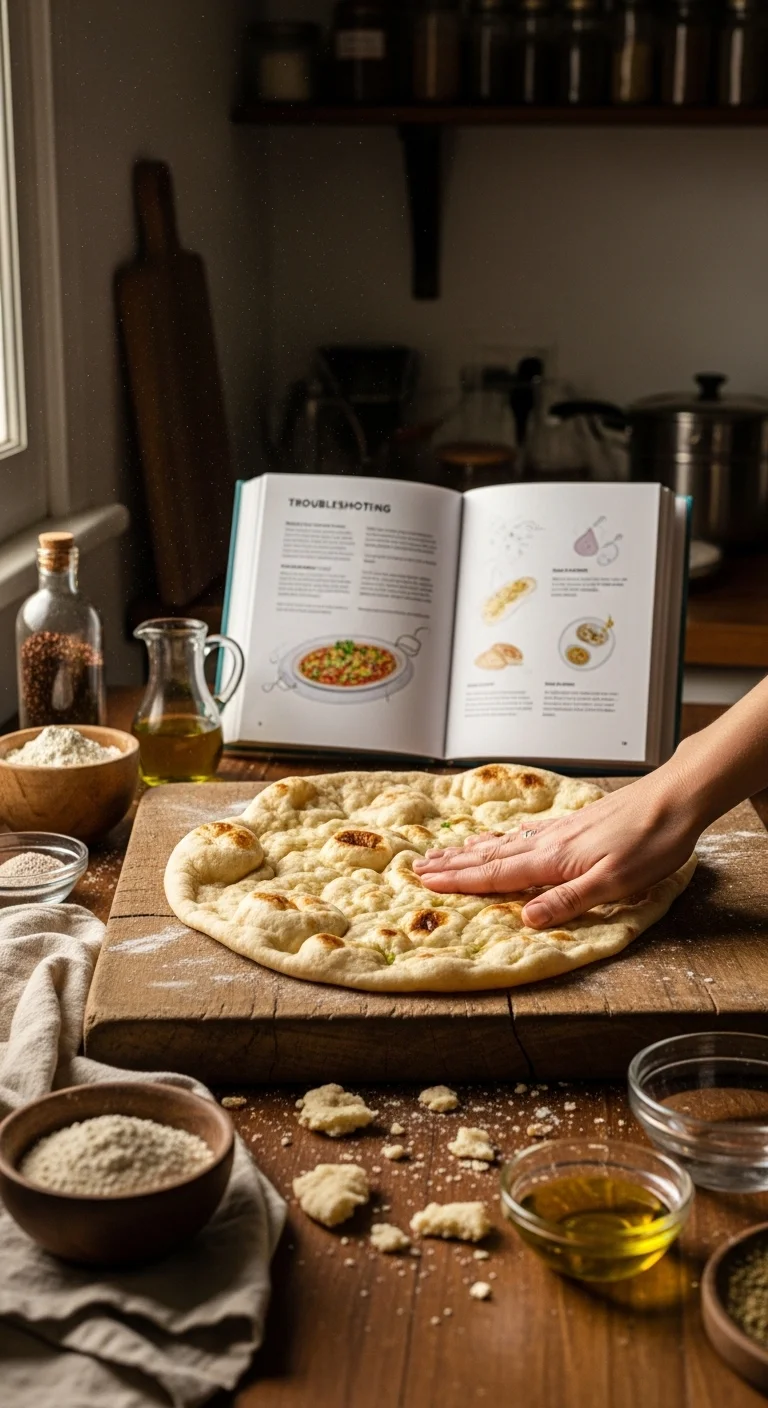
Problem: Naan Didn’t Puff
If your naan stays flat, your skillet wasn’t hot enough. Let it heat for a full five minutes before cooking. The dough should sizzle immediately and bubbles should form within 30 seconds. Also, check that your yeast was fresh and the dough doubled properly during the first rise.
Problem: Naan Is Too Tough
Tough naan usually means overworked dough or too much flour during rolling. Knead just until smooth—about 8 minutes. When rolling, use flour sparingly. A little stickiness is fine. Also, make sure you let the dough rest for the full 15 minutes after shaping. This relaxes the gluten.
Problem: Naan Is Dry or Crackly
Dry naan comes from overcooking or not enough fat in the dough. Cook each side for no more than 2 minutes—it should be golden and bubbly, not dark brown. Use full-fat yogurt and don’t skimp on the oil in the dough. Brushing with butter immediately after cooking also helps lock in moisture.
Problem: Dough Is Too Sticky
Sticky dough usually means too much water or yogurt. Resist adding too much flour during kneading—it can make the final naan tough. Instead, let the dough rest for 10 minutes; the flour absorbs moisture over time. If it’s still too sticky, add flour one tablespoon at a time until manageable.
Problem: Naan Burns Before Cooking Through
If the outside burns before the inside cooks, your heat is too high. Lower the heat to medium and cook for slightly longer on each side. Cast iron retains heat well—you may need to reduce the temperature after the first naan or two.
Problem: Bubbles Aren’t Forming
Bubbles require steam inside the dough. Make sure you rolled the naan to an even thickness—not too thin. Also, ensure your skillet is hot enough. If you’re still not getting bubbles, try adding a teaspoon of water to the dough when mixing; a wetter dough creates more steam.
—
Storing and Freezing Naan Bread
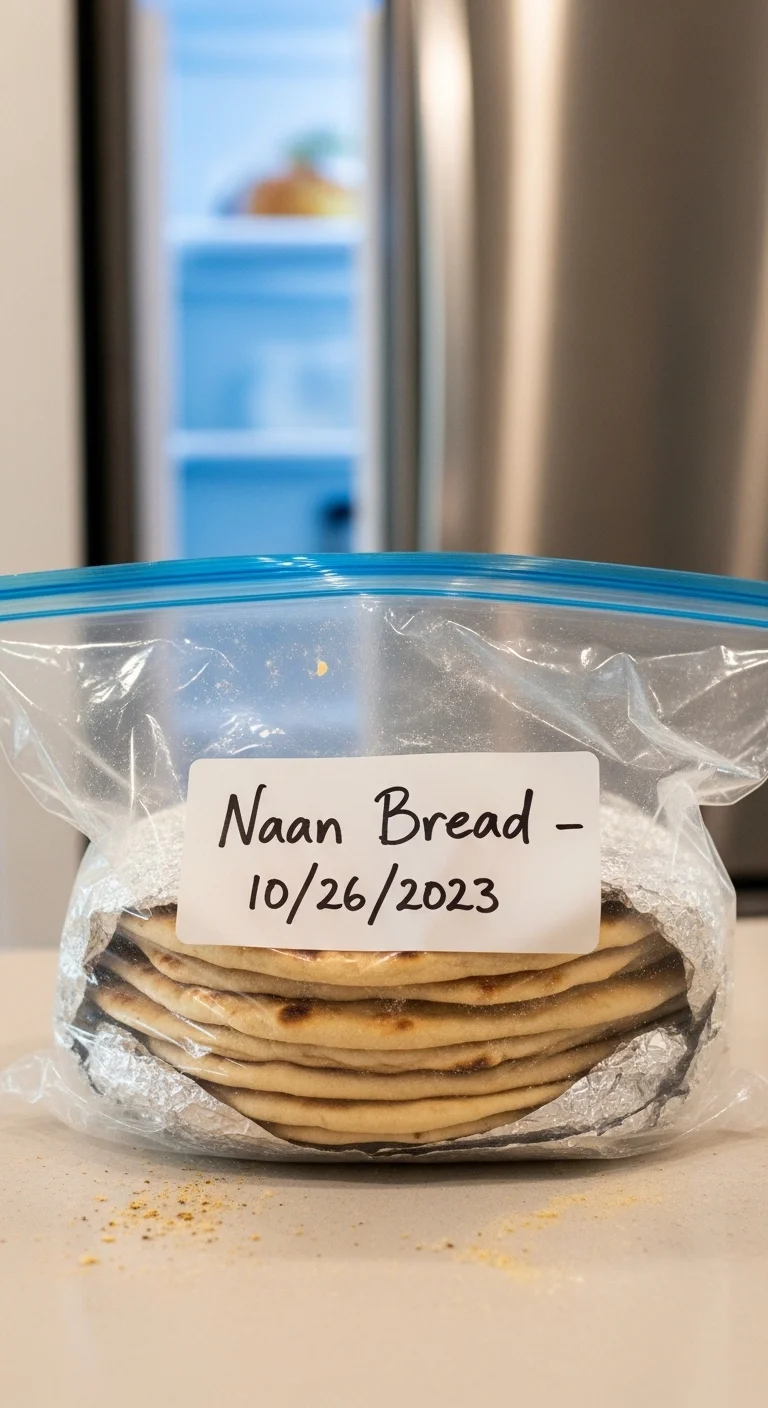
Naan freezes beautifully, making it perfect for make-ahead meals and quick weeknight dinners.
Room Temperature Storage
Wrap cooled naan tightly in foil or place in a sealed plastic bag. Store at room temperature for up to 2 days. For best results, reheat before serving.
Refrigerator Storage
Wrap naan tightly in foil or plastic wrap and store in the refrigerator for up to one week. Reheat in a skillet, oven, or toaster to restore that fresh-from-the-pan texture.
Freezer Storage
Place cooled naan in a single layer on a baking sheet and freeze until solid—about 2 hours. Then stack between pieces of parchment paper and place in a freezer-safe bag. Label with the date. Naan keeps for up to 3 months.
How to Reheat Frozen Naan
No need to thaw. Reheat directly from frozen in a hot dry skillet for 30 to 60 seconds per side. Or wrap in foil and warm in a 350°F oven for 5 to 7 minutes. A toaster or toaster oven also works beautifully for individual pieces.
Make-Ahead Tip
Naan is one of those breads that actually benefits from being made ahead and reheated. Make a double batch on the weekend, freeze half, and pull out as needed. The flavor is just as good—and the convenience can’t be beat.
—
Conclusion
Making naan at home transforms dinner from ordinary to extraordinary. That first bite of warm, blistered bread brushed with garlic butter—it’s the kind of cooking that makes you feel like you’ve discovered a secret. And the best part? The secret is simpler than you think.
This recipe gives you the foundation. Master the dough, the heat, the timing. Then make it your own. Add extra garlic. Fold in cheese. Experiment with herbs. Each batch teaches you something, and each batch gets better.
Your family will request it. Friends will ask for the recipe. And every time you pull a blistered naan from a hot skillet, you’ll remember that the best things in cooking are often the simplest. A few ingredients. A little patience. And the willingness to try.
So heat that skillet. Make a mess with flour. Pull warm bread from your own kitchen. Then sit down, tear off a piece, and enjoy something you made yourself. That’s cooking at its best.
—
Homemade Naan Bread Recipe
Prep Time: 20 minutes
Rise Time: 1 hour 15 minutes
Cook Time: 15 minutes
Total Time: About 1 hour 50 minutes
Yield: 6 to 8 naan
Calories: About 210 per naan (plain)
Ingredients
- 3½ cups (450 grams) bread flour or all-purpose flour, plus more for dusting
- 2 teaspoons active dry yeast or instant yeast
- 1 tablespoon sugar or honey
- ½ cup (120ml) warm water (105°F to 110°F)
- ½ cup plain full-fat yogurt, room temperature
- 1½ teaspoons fine sea salt
- ½ teaspoon baking powder (optional, for extra lift)
- 2 tablespoons vegetable oil or melted butter
For Garlic Butter
- ½ cup (1 stick) unsalted butter, melted
- 3 to 4 garlic cloves, minced
- ¼ cup fresh cilantro or parsley, finely chopped
- Flaky sea salt, for finishing
Instructions
- In a small bowl, combine warm water, sugar, and yeast. Let sit for 5 to 10 minutes until foamy. If using instant yeast, skip this step.
- In a large bowl, whisk together flour, salt, and baking powder if using. Make a well in the center.
- Add the proofed yeast mixture, yogurt, and oil to the well. Stir with a wooden spoon until a shaggy dough forms.
- Turn dough onto a lightly floured surface. Knead for 8 to 10 minutes until smooth and elastic. The dough should be soft and slightly tacky. Add flour or water as needed.
- Place dough in a lightly oiled bowl, turning to coat. Cover with plastic wrap or a damp towel. Let rise in a warm spot until doubled, about 1 to 1½ hours.
- Punch down dough and divide into 6 to 8 equal portions. Shape each into a ball. Cover and let rest for 15 to 20 minutes.
- While dough rests, melt butter and stir in minced garlic. Set aside with chopped cilantro.
- Heat a cast iron skillet over medium-high heat for 5 minutes until very hot.
- Roll each dough ball into an oval or teardrop shape about ⅛ to ¼ inch thick.
- Place one naan in the dry skillet. Cook for 1 to 2 minutes until bubbles form and bottom is golden with dark spots. Flip and cook another 1 to 2 minutes until second side is golden.
- Remove from skillet. Immediately brush with garlic butter and sprinkle with cilantro and flaky salt. Stack on a plate and cover with a towel to keep warm.
- Repeat with remaining dough, keeping cooked naan covered until serving.
Notes
- For garlic naan, press fresh garlic slices into the dough before cooking, or increase garlic in butter.
- For cheese naan, stuff each dough ball with 2 tablespoons of shredded mozzarella or paneer before rolling.
- For whole wheat naan, replace half the flour with whole wheat flour and increase water slightly.
- Leftover naan keeps at room temperature for 2 days, refrigerated for 1 week, or frozen for 3 months.
Nutrition Information (Per Naan, Plain, Without Garlic Butter)
- Calories: 210
- Total Fat: 5g
- Saturated Fat: 1g
- Cholesterol: 3mg
- Sodium: 380mg
- Total Carbohydrates: 35g
- Dietary Fiber: 1g
- Sugars: 2g
- Protein: 6g
Keyword: homemade naan, naan bread recipe, garlic naan, Indian flatbread, easy naan